Exploring the Future of Interactive Learning in Melbourne
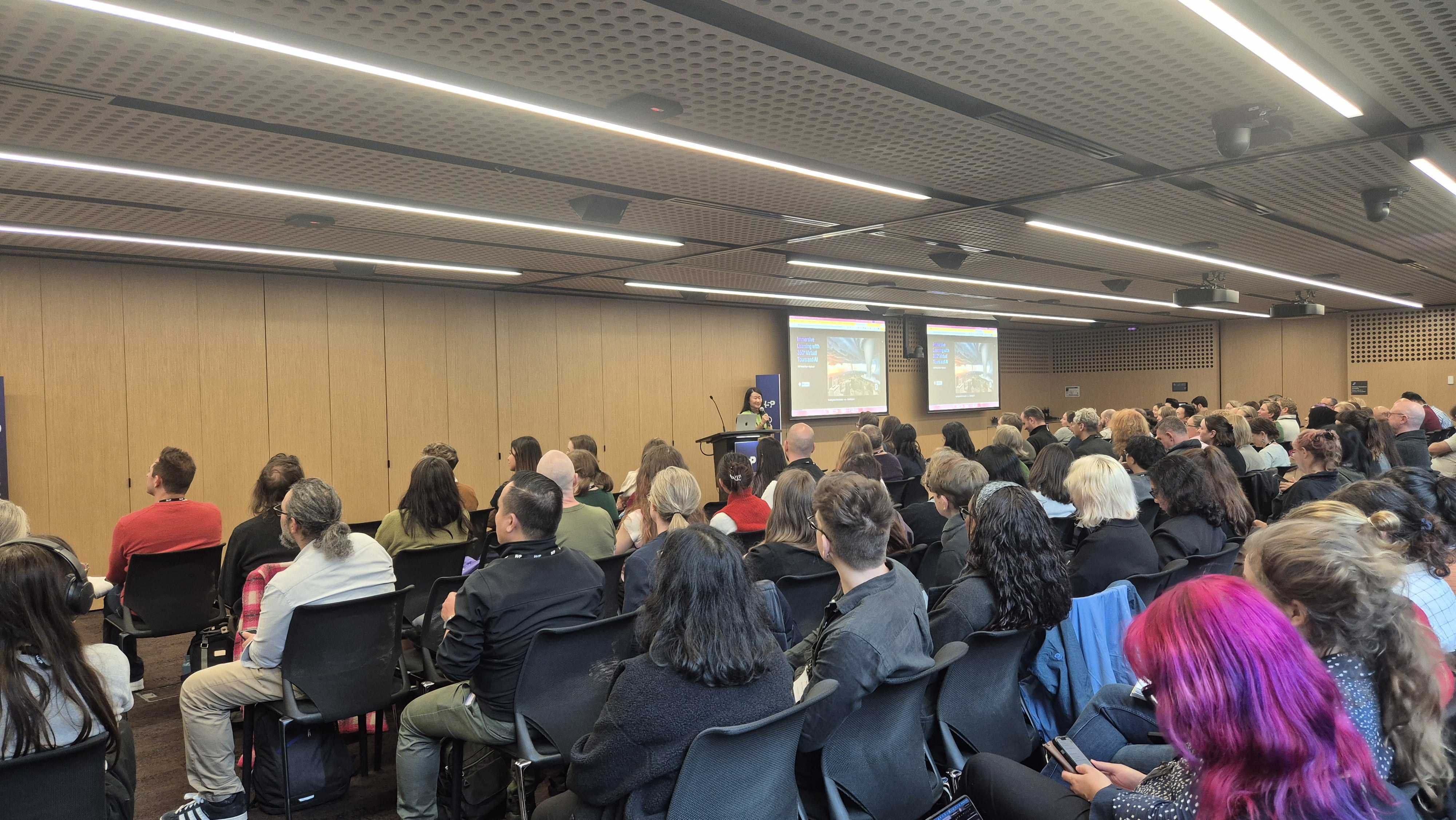
Last week’s H5P Community event in Melbourne reminded us exactly why these events matter so much. For our second Melbourne event, we honestly didn’t know what to expect, but the community showed up in full force. Not only did the event sell out, but the energy, conversations, and collaboration throughout the day exceeded anything we could have hoped for here at H5P.
From the moment attendees arrived, there was a real sense of excitement in the room. Educators, learning designers, academics, multimedia teams, technologists, and H5P authors all came together with one common goal: creating better and more engaging learning experiences.
What stood out most wasn’t just the presentations themselves but the willingness from everyone to share ideas, ask questions, and openly discuss both the opportunities and challenges happening across education right now.
Throughout the day, we saw a strong theme emerge around the future of learning design and how interactivity, storytelling, accessibility, and AI are all beginning to intersect in meaningful ways. Keep reading this blog to see our main takeaways from the event.
Tony Maguire’s opening keynote, *Modernising Without Dehumanising*, set the tone perfectly. Rather than focusing purely on AI tools, the session explored something much bigger: how institutions can continue to modernise while still protecting trust, transparency, integrity, and the human side of learning. It sparked some incredibly thoughtful conversations that carried throughout the rest of the event. There was a real sense that people are no longer asking *if* AI will impact education, but instead they’re now asking how to implement it responsibly and intentionally.
One of the biggest takeaways from the day was seeing how H5P is being used well beyond traditional content creation.
RMIT University shared how they used H5P Branching Scenario to build a “Strategy Sprint” experience where students stepped into executive roles and navigated realistic business challenges under pressure. It was a brilliant example of how interactive learning can move students from passive learners into active participants, encouraging collaboration, decision-making, and reflection.
We also explored how H5P continues to support more accessible and open learning experiences.
Angie Williamson from Deakin University showcased how H5P has become a core part of their Open Educational Resources initiatives, helping transform online textbooks into engaging and interactive learning experiences. It was particularly valuable to hear how accessibility and student engagement were being considered from the beginning of the design process rather than added later as an afterthought.
Another major highlight throughout the day was immersive learning.
Zoe Zhang’s session on AI-enhanced 360° Virtual Tours had the room completely engaged. Combining AI-generated environments with H5P interactions opened up so many conversations around what immersive learning could look like moving forward, especially for institutions wanting scalable, creative, and highly engaging experiences without needing massive development resources. I'm sure attendees would agree that the room was filled with laughter, learning and a new openness to trying out different tools.
Swinburne University built on this idea further by showcasing how virtual tours and simulations are being integrated into nursing and clinical learning environments. Their work demonstrated how interactive experiences can help create safe spaces for students to practise decision-making and critical thinking before entering real-world settings.
One thing we kept hearing throughout the day was how practical the sessions felt.
Attendees weren’t just leaving inspired, they were leaving with ideas they could genuinely take back to their teams and start applying immediately. Whether it was branching scenarios, accessibility practices, multimedia workflows, immersive learning, or AI-supported design processes, there was a strong focus on real implementation and shared practice from what we heard.
The workshop sessions especially reinforced this.
Danielle Teychenne’s *Build Your Own Branching Scenario* workshop reminded everyone that strong interactive learning starts with strong storytelling. The session focused less on the technology itself and more on how meaningful choices, narrative tension, and learner agency can create memorable learning experiences.
Later in the day, La Trobe University shared their journey of embedding H5P more broadly across their institution, including how they scaled interactive content creation while balancing accessibility, sustainability, quality, and the growing role of GenAI in workflows. A fun fact, the most recent H5P Award Winners came from a submission at La Trobe, and we were so thrilled they were presenting on the day.
And honestly, beyond the presentations, the networking was one of the best parts.
The conversations during coffee breaks enabled everyone to exchange ideas, solve challenges together, and make connections that will hopefully continue long after the event itself. By the time we reached the networking reception, nobody really wanted to leave.
That’s exactly why we create these free community events. It's a space not just presentations, but where people feel connected to a wider community of educators and creators, all trying to push learning experiences forward together.
To everyone who attended, presented, asked questions, shared ideas, or simply came along to connect with others, thank you. The success of these events comes entirely from the people in the room, and Melbourne absolutely delivered.
And if you missed this one, don’t worry.
We’re heading to Sydney this August, and after what we experienced in Melbourne, we can already tell it’s going to be another special event. We're also looking for our next speakers, so if you have an idea, please submit using the link here.
See you soon!
Kelly
H5P Community Manager